
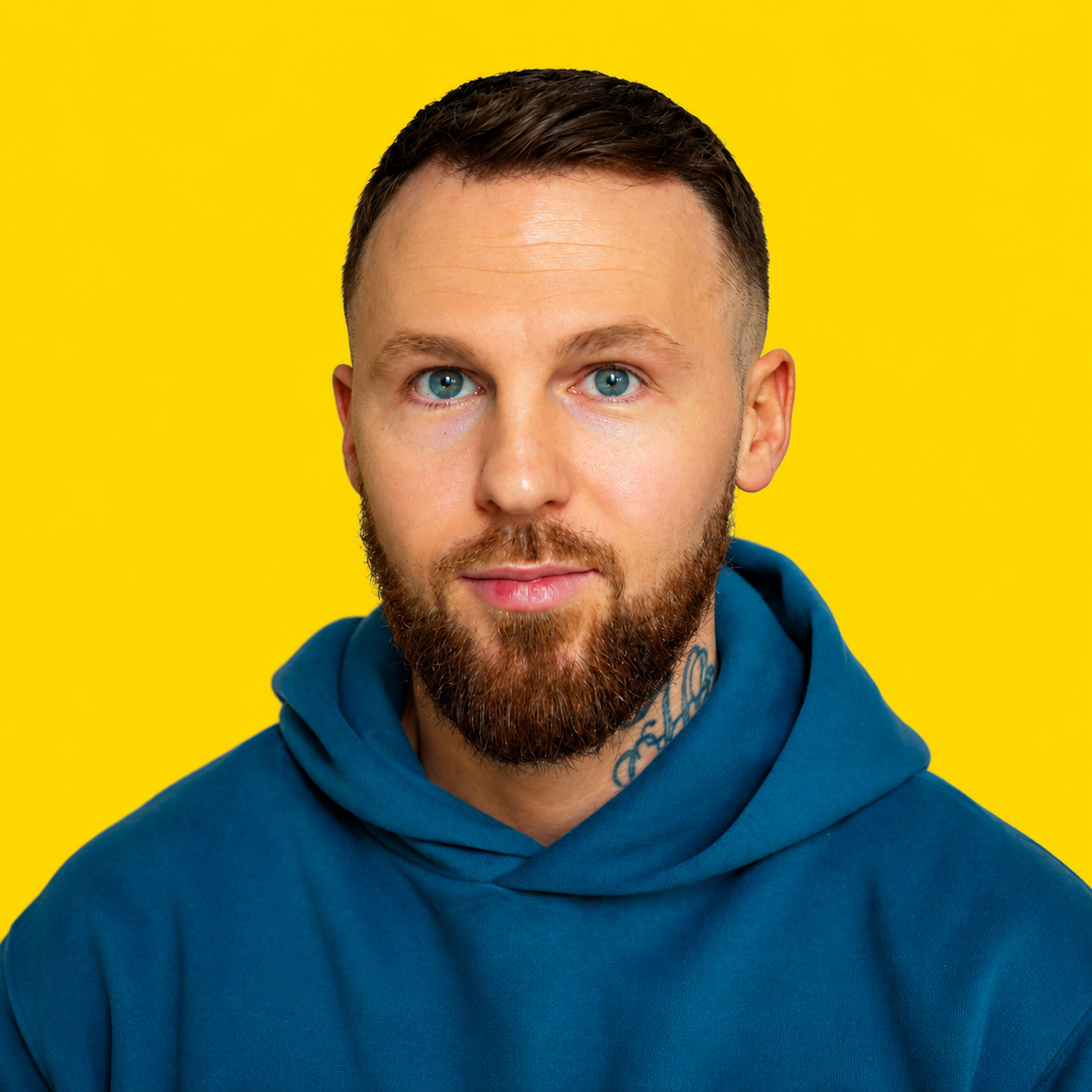
When you're starting a business, you are usually the brand. People buy from someone they recognise and trust long before they'd buy from a logo they've never heard of. That's good news, because it means you don't need a big budget. You need to be clear, visible and useful for long enough that people start to remember you.
This guide is for UK founders and freelancers building from scratch, with no audience and not much spare time. It covers what to be known for, where to post, what to say and how to turn attention into paying customers.
Decide who you help and what you're known for
Start with one sentence: I help [who] with [what]. For example, "I help independent cafes in Leeds get more bookings from Instagram" or "I help first-time landlords keep their paperwork in order". It should be narrow enough that the right person reads it and thinks, that's me.
Narrow feels risky, but it's what makes you memorable. "Marketing consultant" is easy to forget. "The person who helps trades businesses get more reviews" gets passed on. You can widen later, once people know you for something. If you're unsure which group to pick, some low-cost market research will show you who has the problem most clearly.
- Who do you most enjoy working with?
- What do people already ask you for help with?
- Which group has a problem they'd pay to fix?
Choose one main platform
Trying to be everywhere at once is the quickest way to burn out. Pick one main platform, based on where your customers already spend time, and give it a few months before adding another. You can repost to other places, but put your real effort into one.
If your customers are local, don't overlook local Facebook groups and Google reviews either. They're less exciting than building a following, but they're often where nearby customers look first.
- LinkedIn: best if you sell to other businesses or offer professional services like consulting, bookkeeping, recruitment or design.
- Instagram: good for visual work and local consumer businesses, such as food, beauty, fitness, interiors and crafts.
- TikTok: suits short, personality-led videos and can show your content to people who don't follow you yet, which helps when you're starting from zero.
- YouTube: slower to build, but videos keep being found through search long after you post them, so it works well for how-to and explainer content.
Get your profile basics right
Your profile is where people decide whether to follow you or get in touch. Most visitors give it a few seconds, so make it obvious who you help and what they should do next.
- A clear, friendly photo of your face rather than a logo.
- A bio that says who you help and how, in plain words.
- One call to action, like "Message me for a free 15-minute chat" or a booking link.
- Your town or region if you work locally, so nearby customers know you're close.
- A few pinned posts that show your best work or explain what you do.
Content ideas that come from your work
You don't need to invent clever content. The best ideas come from the work you're already doing. Keep a note on your phone and add to it whenever something comes up during the week.
Aim to be useful first. A post that helps someone solve a small problem builds more trust than one that just says you're open for business. Over time, the useful posts are what make people think of you when they need help.
- Questions customers or friends ask you. Each one can be a post.
- Mistakes you often see people make, and how to avoid them.
- Lessons from a job you've just finished, with permission or with identifying details removed.
- Behind the scenes: how you do the work, the tools you use, what a normal day looks like.
- Before and after examples, if your work is visual.
- Your honest view on something common in your industry.
How often to post
Consistency matters more than volume. A rhythm you can keep for six months beats daily posting for three weeks followed by silence. For most people starting out, two or three posts a week on one platform is realistic alongside other work.
Batch it if you can. Spend one session writing or filming several posts, then schedule them. Pay attention to which posts get replies, saves and messages, not just likes, and do more of those. If keeping going is the hard part, our guide on how to stay consistent with your business can help.
Engage, don't just post
Posting and walking away rarely works when you're small. Spend as much time replying, commenting and joining conversations as you do creating. Thoughtful comments on posts by people your customers already follow can get you in front of the right people faster than your own posts.
Reply to every comment and message you get early on. Talk to other people at your stage, too. They often become peers, referrers and sometimes customers.
Turn attention into conversations and customers
Followers don't pay bills. Conversations do. Make it easy for interested people to take the next step, and invite them to: "If this sounds like you, send me a message" is enough. When someone engages a few times, a friendly, low-pressure message to say thanks and ask what they're working on can start a real conversation.
Have a simple offer ready so you know what to say when someone asks how you can help, and a price you're comfortable saying out loud. Our guides on getting your first customers and pricing your services cover both.
Two UK rules are worth knowing. If you build an email list, the ICO says you generally need people's consent to send them marketing emails, unless the "soft opt-in" applies to customers who bought or asked about something similar, and every message needs an easy way to opt out. And if you've been paid or gifted something to promote, or you're promoting a business you're connected to in a way your followers might not realise, the CMA's guidance says to make that clear in the post itself, usually by labelling it as an ad, not just in your bio. This is general information, so read the guidance or get advice if you're unsure.
Be patient and judge the right numbers
Building a personal brand is slow. Expect to post for months to a small audience before anything noticeable happens. Early posts are practice: you'll get clearer, more confident and better at knowing what your audience wants to hear.
Judge progress by conversations and enquiries rather than follower counts. Ten people who know exactly what you do and would recommend you are worth more than thousands who scroll past. If you'd like feedback on your posts and people to grow alongside, the Exitnine entrepreneur community is one place to share drafts and check in on how it's going.
Questions people ask
Do I need a personal brand to start a business?
No, but it helps a lot when you're small. People are more likely to buy from someone they recognise and trust, and showing up as yourself costs nothing but time.
Which social media platform is best for a small business?
The one your customers use most. LinkedIn tends to suit business-to-business services, Instagram and TikTok suit consumer and visual businesses, and YouTube suits how-to content that people search for.
How long does it take to build a personal brand?
Expect months rather than weeks. Posting regularly on one platform and talking to people every week matters far more than any single post doing well.
Should I use my own name or a business name?
If you deliver the service yourself, using your own name and face usually builds trust faster. You can still have a business name, and plenty of people use both.